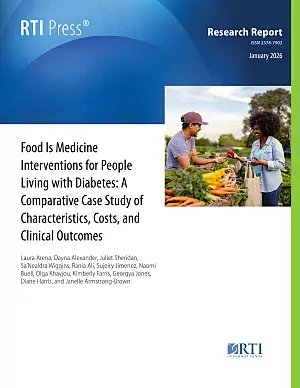
Food Is Medicine interventions for people living with diabetes: A comparative case study of characteristics, costs, and clinical outcomes
Abstract
Food Is Medicine (FIM) interventions that offer nutrition access and health education may improve diabetes outcomes among people experiencing food insecurity. Health systems typically offer FIM interventions through referrals to onsite services and to partner organizations that provide healthy food, health education, or both. This comparative case study assessed effectiveness, costs, and culturally tailored components of four diabetes self-management education and support (DSMES) sites, two with a FIM intervention and two without.
We applied the Culturally Responsive Evaluation Framework and Consolidated Framework for Implementation Research to design this study. We coded and analyzed data from interviews with DSMES and FIM staff using NVivo 12, analyzed clinical outcomes with Stata 17 (N = 177), and collected retrospective information on FIM implementation costs. Interviewees described various approaches (e.g., adapting food recipes) to cultural tailoring.
FIM staff (n = 9) reported high satisfaction and improved behavioral and health outcomes among FIM participants. Despite small sample sizes, clinical trends indicate that both a FIM intervention and DSMES services may effectively lower A1C (-0.64 percentage points [n = 28, P = 0.017] and -1.86 percentage points [n = 74, P < .001], respectively).
Despite differences in design, total annual ongoing costs for both FIM interventions were similar ($102,011 vs. $95,652). More research and evaluation are needed to understand the impact of FIM interventions and how to increase reach and culturally tailor interventions among populations.
 © 2026 RTI International. This work is licensed under a Creative Commons Attribution-NonCommercial-NoDerivatives 4.0 International License.
Meet the Experts

Navigate to
Juliet Sheridan

Juliet Sheridan
Navigate to
Olga Khavjou