Insights




Key Takeaways
Understanding and investing in rural communities can improve residents' health and create positive effects throughout society.
Based on our evaluation of the Accountable Health Communities model, we identified transportation as one of the most significant barriers to health care in rural areas.
We offer several recommendations for expanding transportation access as part of comprehensive health investments in rural America.
Across the country, there is growing recognition that health is shaped by more than medical care. People need stable housing, reliable food, safe environments, and—critically—transportation to stay healthy. Keeping people healthy saves public resources and consumer costs, and causes positive ripple effects throughout society.
Recent federal investments in rural health, including initiatives like the Rural Health Transformation Program, reflect this shift. These efforts aim to strengthen rural health systems by improving access to care and addressing the broader challenges that affect health in rural communities.
At the same time, we are not starting from scratch. We’ve already learned important lessons from prior health initiatives that can help guide new efforts to strengthen rural health.
What the Accountable Health Communities Model Reveals
The Centers for Medicare & Medicaid Services’ Accountable Health Communities (AHC) Model was a national effort to test whether identifying and addressing patients’ unmet needs—related to housing, food, home utilities, safety, and transportation—could improve health and reduce avoidable healthcare use and spending.
RTI evaluated the AHC Model, a core part of which was screening patients for unmet needs and connecting them to community resources through referrals and navigation support.
Although the model has ended, the evaluation offers valuable insights for improving health in rural communities.
Rural Health Depends on Accessible Community Resources
The success of interventions like the AHC Model depends on the availability of community resources to meet patients' needs. Relevant resources are often provided by local government agencies, food banks, domestic violence shelters, advocacy groups, and other social service organizations. Using AHC evaluation data, we compared rural and nonrural communities and found clear differences in available resources: 60 percent of primarily rural AHC Model communities had low resource availability, versus 48 percent of communities that were not primarily rural. These findings align with existing research.
See p. 35 of the Third Evaluation Report for information on our methods.
Interviews with people who implemented the AHC Model reinforced these findings. They consistently described rural areas as having fewer service providers, greater distances between services, and limited infrastructure to connect people to care and support when compared to nonrural areas. These gaps make it harder for people to benefit from available services.
How Transportation Barriers Affect Rural Health
There's many different transportation organizations for medical appointments, but not for going to the grocery store or church or whatever else. – Interview participant
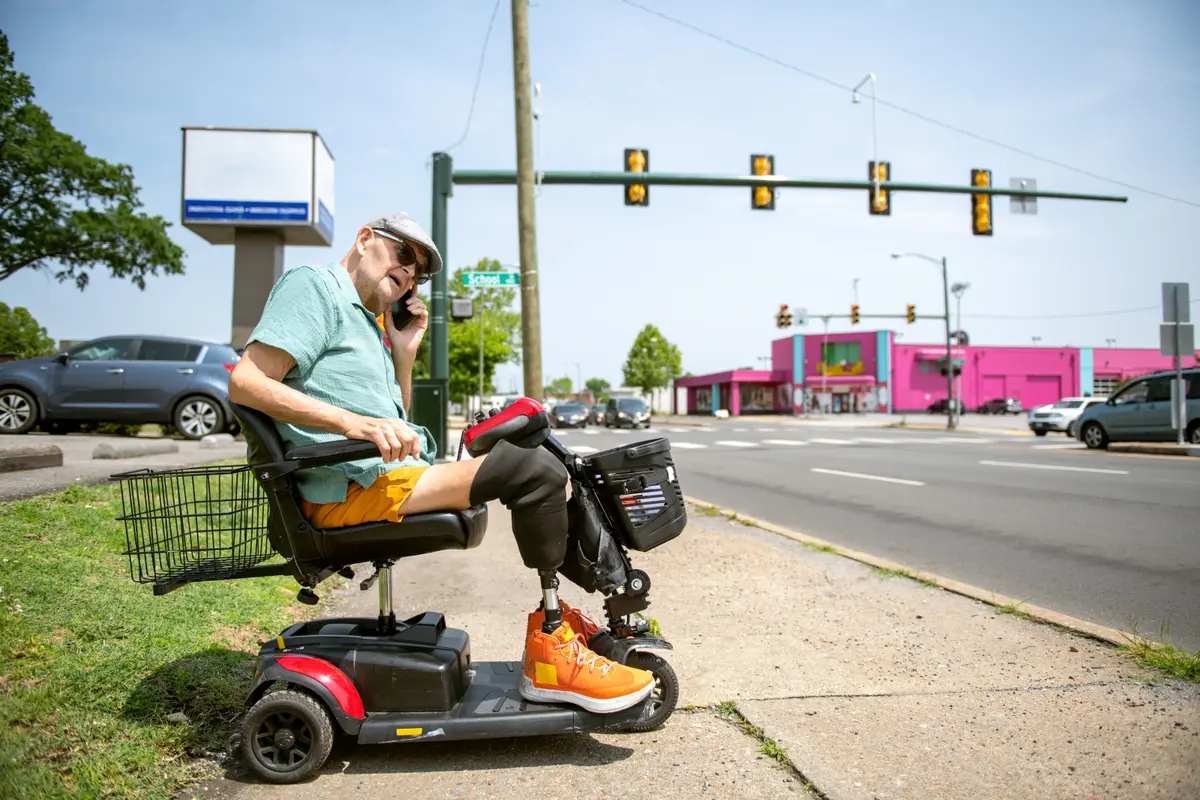
One issue stood out as particularly challenging: transportation. Our interviews reflect that, in many rural communities:
- Public transit is limited or nonexistent.
- Ride‑sharing services may not be available.
- Available transportation programs often only cover medical visits and cannot be used for other purposes, like seeking food or housing support.
A lot of the food pantries might be in your zip code, but you don't have transportation to get there. – Interview participant
This creates a ripple effect. When people cannot access community services, other needs go unmet. In the AHC Model evaluation, we found that, after accounting for other personal and health characteristics, AHC participants with unmet transportation needs were 16–18% less likely to have their other needs resolved compared to participants without transportation needs. This was true regardless of whether people lived in rural or nonrural areas. In other words, transportation is not just one need among many—it is a gateway. When transportation barriers exist, they make it harder to solve every other problem.
Community Strengths Can Support Rural Health Access
Despite these challenges, the AHC Model evaluation interviews also highlighted important strengths in rural communities:
- Close-knit relationships and strong social networks
- Greater awareness of available resources
- Informal coordination among local providers
These connections can make it easier for people to find and use the resources that do exist. In some cases, they also help service providers work together more effectively.
How Leaders Can Strengthen New Rural Health Investments
As efforts like the Rural Health Transformation Program move forward, the findings from the AHC Model evaluation provide a clear direction: Access is just as important as availability.
Expanding services alone is not enough. If people cannot reach those services, the impact will be limited.
To make investments more effective, transportation should be a core part of the strategy. This could include:
- Expanding transportation programs beyond medical-only trips
- Supporting community-based transportation projects
- Bringing medical and social services closer to where people live or using mobile and technology-enabled solutions
- Better coordinating services to reduce travel burden
Without addressing transportation, even strong investments in services may fall short.
Transportation Must Be Part of Rural Health Strategy
Addressing unmet nonmedical needs can improve health, but only if communities have the capacity to respond. For rural communities, transportation is a critical part of that capacity.
As new investments aim to transform rural health systems, applying this lesson will be essential. Because in many rural areas, improving health starts with something simple: Making sure people can get where they need to go.
For more information, explore the CMS Accountable Health Communities Model and evaluation findings.
Disclaimer: This piece was written by Julianne (Jules) Payne (Research sociologist, Community and Workplace Health), Kristen C. Giombi (Research Economist), and William J. Parish (Health Economist) to share perspectives on a topic of interest. Expression of opinions within are those of the author or authors.