Insights

Lauren Greene
Content & Storytelling Specialist

Up to 50 million people in the United States will contract the flu this year, with up to 710,000 hospitalized.
Infectious diseases like influenza can spread through multiple routes, including airborne particles, direct contact, or contaminated objects. The virus travels from host to host, rapidly multiplying, and for vulnerable populations, contracting illnesses like the flu can be devastating.
But what if we could stop infectious diseases from spreading with better data and personalized tools like wearable technologies? Researchers at RTI are working to do just that by turning scientific discovery into real-world solutions.
How infectious diseases spread before symptoms appear
Infectious diseases can be a challenge to track and stop because they often spread before the host feels sick or experiences symptoms. Individuals who can transmit a pathogen without feeling sick are referred to as presymptomatic or asymptomatic. The risk of asymptomatic transmission is particularly difficult to track and prevent as it typically requires stopping chains of transmission prior to knowing an individual is ill.
Imagine this scenario:
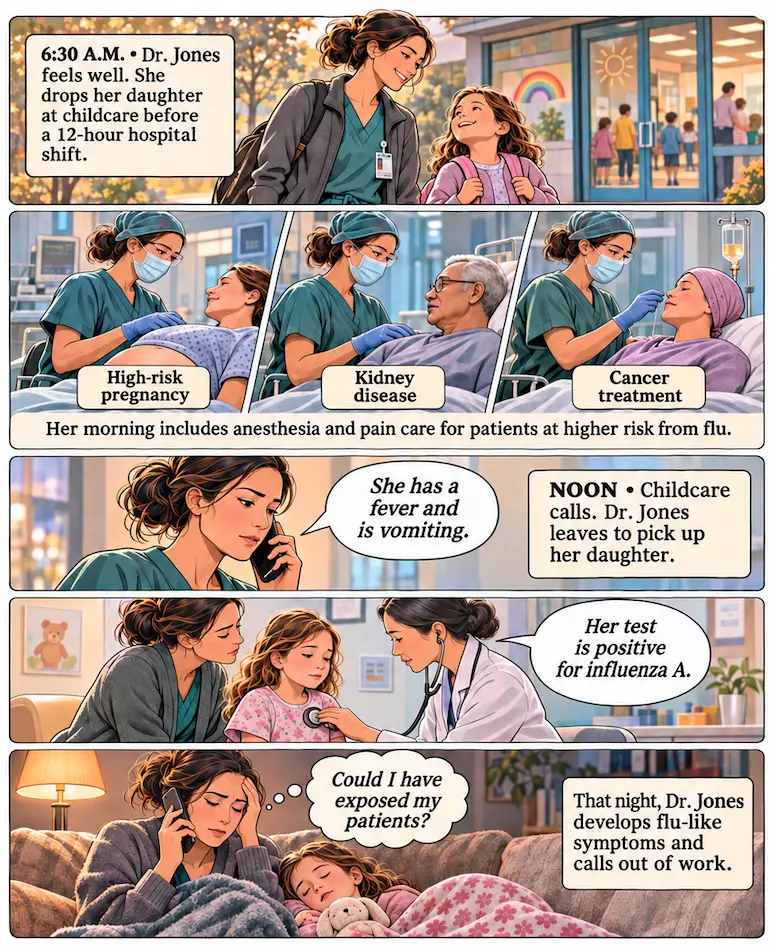
Dr. Jones and the actions depicted in this illustration are fictional.
Tracking infectious diseases in health care settings
Health care workers across the United States regularly face situations like the one described above, where multiple exposure pathways expose vulnerable patients and staff to pathogens.

Infectious disease transmission can seem unpredictable at times,” explains Joella Adams, PhD, an epidemiologist at RTI. “A single infection might start with one person, but outbreaks emerge from the culmination of dozens of small interactions.”
Adams has spent most of her career studying how diseases move through vulnerable populations and what can be done to prevent the spread. Recently, she explored how research can translate into actionable steps for preventing infectious disease outbreaks in health care facilities.
During the COVID-19 pandemic, Adams adapted RTI's North Carolina Modeling Infectious Disease (NC MInD) Program to evaluate how policies related to visitation, vaccination, and testing in nursing home and hospital settings affected the number of undetected asymptomatic SARS-CoV-2 carriers entering these facilities. The program used sophisticated computer modeling to simulate how patients and health care staff move through these settings. By mapping connections among hospitals, nursing homes, and long-term-care facilities, researchers identified where an infection was most likely to enter and spread through a health care network and what policies were most effective in halting the virus’s spread.
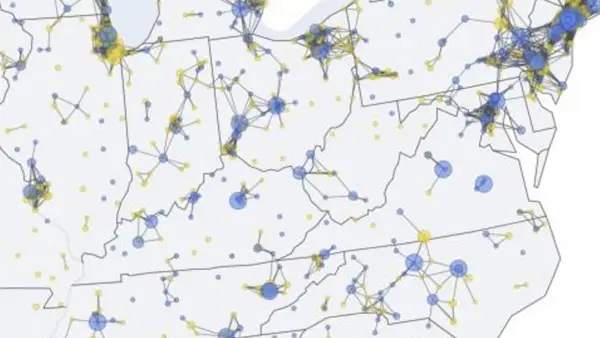
Blue = hospital. Yellow = long-term care facilities.
“If administrators know their facility is highly connected—or see an increase in transmission at a nearby facility—they can act earlier,” Adams explained. “We found that proactive steps can be extremely effective in reducing infectious disease outbreaks in interconnected systems like health care facilities.”
The illustration to the right hypothetically shows how hospitals and long-term care facilities are linked by patients traveling among facilities.
Staff who interact with multiple facilities or work on a multidisciplinary team within a hospital setting are important points of intervention for infectious disease prevention. Modeling these relationships in the context of infectious disease spread can also help leaders compare policies, allowing them to protect patients without imposing unnecessary restrictions.
Early detection of infectious diseases at the individual level
Understanding how infectious diseases move through interconnected facilities provides one layer of protection: the ability to see where disease risk is emerging and take preventive action. But facility-level interventions alone may not be enough to prevent an outbreak.
A second layer of protection begins with the individual. If a person is aware of subtle signs of infection before symptoms appear, they can take action and avoid bringing the pathogen into interconnected settings like health care facilities.
Now imagine the same morning as before, with an important difference: Dr. Maya Bennett receives an early warning before she begins her shift.
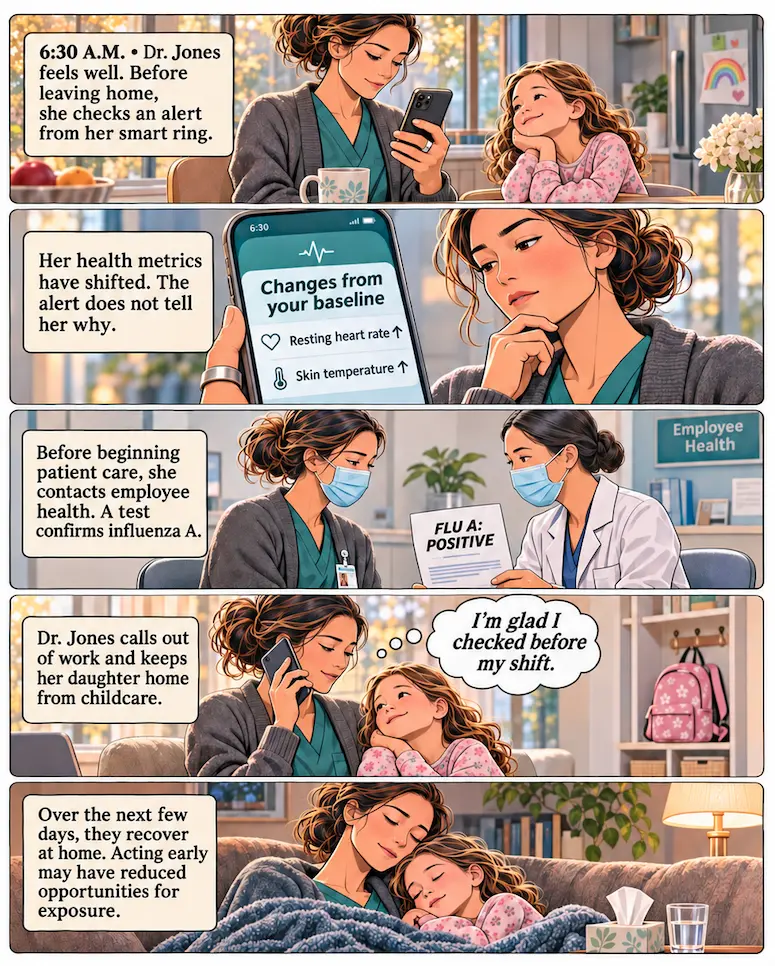
Dr. Jones and the actions depicted in this illustration are fictional.
This alternative scenario shows what is possible when early detection reaches the individual before an infection reaches an interconnected health care facility. The fictional doctor's decision protects more than her own health; it removes a potential link in the chain of transmission connecting her household, childcare setting, and workplace.
Making prevention easier: Personalized monitoring for earlier intervention
Wearable technologies like smart rings and watches continuously monitor a person’s physiology, allowing them to compare current measurements with their own baseline rather than a population-wide standard. This passive monitoring supports the shift toward individualized, data-driven decisions using precision medicine.

Meghan Hegarty-Craver, PhD, a biomedical engineer at RTI, researches how data from these devices translates into information that can be used to detect changes in a person’s health.
A person might not recognize subtle changes in their resting heart rate on a daily basis,” Hegarty-Craver explained. “Because wearables collect so much data and do so passively, they can detect small changes that people may not be aware of. These data points can indicate that a person’s health is moving in a negative direction, prompting them to take action.”
Monitoring an individual’s physiological condition and accumulating their health data at a population level could provide a mechanism for understanding and limiting outbreaks. This concept shaped Hegarty-Craver's work when developing AlphaWear, a platform that uses wearable sensors, including Garmin watches and Oura rings, to detect signs of meaningful changes in an individual’s health. The Defense Advanced Research Projects Agency (DARPA) funded this work within the SIGMA+ human sentinel program, with the initial application of helping track or limit flu outbreaks in both military and public health settings.
"AlphaWear was one of the first wearable health platforms that moved beyond simple activity tracking to provide continuous, individualized health-risk monitoring, including early detection of infection," she said.
Long shifts and few breaks can make some military routines resemble those of health care settings, Hegarty-Craver explained. In military applications, those routines produce activity patterns that differ from the average population. Platforms like AlphaWear track each person’s unique physiological patterns to distinguish changes likely due to routine activity from those that might signal an emerging health concern.
In public health settings, AlphaWear can be especially beneficial for supporting epidemiological studies and public policy that help stop the spread of a disease. Individuals can identify whether they may be sick, get tested, and isolate. AlphaWear can also provide health tracking data at a population level to support leaders as they navigate protocols for infectious disease outbreaks.
Building a strong defense against infectious diseases
Every infectious disease outbreak is built from a chain of interactions, whether it’s a person entering a workplace or a family member unknowingly carrying a virus home. The future of controlling infectious disease might depend on connecting types of data that have remained separate: changes within an individual, patterns across facilities, and transmission risk throughout communities.
System-level modeling and person-level monitoring can create complementary lines of defense that identify where risk is building and who may be carrying an infection. By translating these signals into action, researchers can help shift infectious disease monitoring from responding to outbreaks to intervening before they occur.
Learn more about RTI's infectious disease modeling and tracking

RTI-Cassandra™: Disease Outbreak Simulation Tool
RTI Cassandra™ is a scalable infectious disease modeling tool that simulates how diseases spread across populations, accounting for factors such as human movement, demographics, health systems, and environmental conditions.
NIAID Centers for Research in Emerging Infectious Diseases Network
RTI is coordinating the NIAID Center for Research in Emerging Infectious Diseases (CREID) Network to advance research and preparedness for emerging infectious diseases.
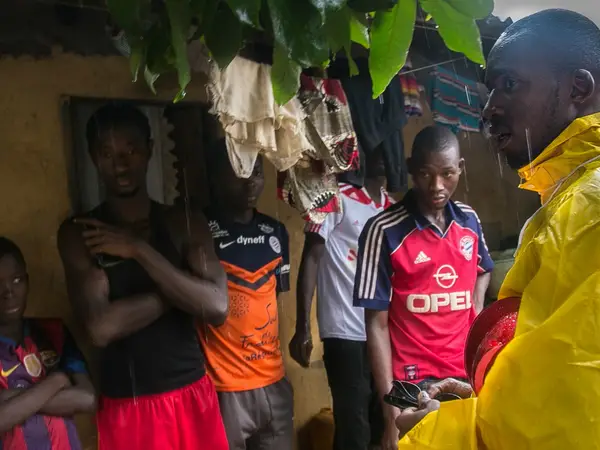
Global Health Security
RTI's work in global health security helps countries prevent, detect, and respond to infectious disease outbreaks by strengthening health systems, disease surveillance, workforce capacity, data systems, and outbreak preparedness.
Disclaimer: This piece was written by Lauren Greene (Content & Storytelling Specialist) to share perspectives on a topic of interest. Expression of opinions within are those of the author or authors.