Newsroom
Study links seasonal changes to chemical pollution shifts in Durham, NC waterway, which flows into a major drinking water source
RESEARCH TRIANGLE PARK, N.C. — New research from independent scientific research institute RTI International and North Carolina Central University (NCCU) has found that chemical activity in a Durham waterway was higher in months with increased rainfall, indicating that runoff from homes, businesses and new construction work is leading to increased pollution.
Researchers collected monthly water samples at three locations in Third Fork Creek between July and December 2022. They found more than 1,300 chemical features linked to everyday products and noted that weather patterns seem to be responsible for elevating those levels in certain months. Identified compounds include medications, pesticides, per and polyfluoroalkyl substances (PFAS), plastic additives, cleaning agents and common household items.
The creek runs through a heavily developed area in South Durham and flows into Jordan Lake, a major regional drinking water source. Because the last comprehensive study of this creek was in 2014 and showed signs of poor water quality, the team used both standard testing and broader screening tools to better understand water quality and identify priorities for future monitoring.
“Non-targeted analysis helps us spot emerging contaminants and get a clearer picture of what’s in our waterways,” said RTI research scientist Imari Walker-Franklin, Ph.D. “Seeing how those patterns shift over time can help communities make more informed decisions about water quality.”
The six-month study, published by RTI Press, shows that chemical levels in the creek changed noticeably from month to month, offering a clearer picture of how modern pollutants move through local streams. July, October and December showed the highest levels of chemical activity. Researchers noted that these months also had more rainfall or storm-related runoff, which can wash additional substances from roads, yards and neighborhoods into local creeks.
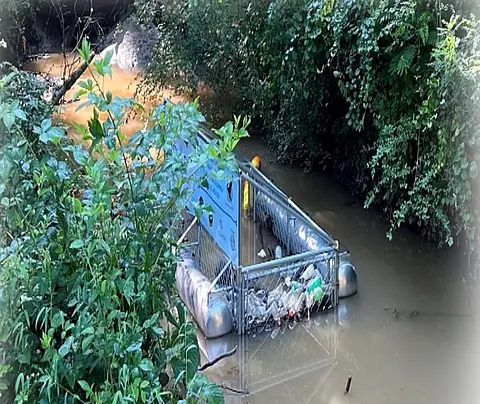
"Third Fork Creek, which runs near the heart of NCCU’s campus, has long been central to water-quality research at the University, even before I joined the faculty," said Carresse Gerald, Ph.D., NCCU associate professor, Dept. of Environmental, Earth and Geospatial Sciences. "My colleagues, Drs. Tonya Gerald-Goins and Porche` Spence had previously studied contaminants in Third Fork Creek, so it only seemed right to investigate and probe more. This research will complement existing efforts such as the trash trap installed by Haw River Assembly and ultimately aid in protecting this vital waterway. Our research partnership with RTI has allowed us to expand this work, deepen our understanding of water contamination, and strengthen monitoring and mitigation efforts in the area.”
The study identified 30 previously unreported compounds compared to the creek’s last comprehensive assessment more than a decade ago, through the U.S. Geological Survey.
The project was conducted through the NCCU–RTI Center for Applied Research in Environmental Sciences (CARES), which brings together scientists from both institutions to study how environmental conditions affect people and ecosystems.


RTI International is an independent scientific research institute dedicated to improving the human condition. Our vision is to address the world's most critical problems with technical and science-based solutions in pursuit of a better future. Clients rely on us to answer questions that demand an objective and multidisciplinary approach—one that integrates expertise across social, statistical, data, and laboratory sciences, engineering, and other technical disciplines to solve the world’s most challenging problems.
For more information, visit www.rti.org.