Invisible Ingredients: How Forever Chemicals Leach into Food and Beverages


PFAS enter food through multiple pathways. Contaminated water or biosolid fertilizers, packaging materials, and processing equipment all contribute to exposure.
Exposure is widespread but often invisible. PFAS cannot be seen, tasted, or smelled, making testing and monitoring essential.
Industry action is critical to reduce risk. Companies can map usage, adopt safer alternatives, and align with evolving regulations to limit exposure.
Per- and polyfluoroalkyl substances (PFAS) are a class of chemicals under increased scrutiny because of their persistence in the environment. Additionally, some PFAS—like perfluorooctanoic acid (PFOA) and perfluorooctane sulfonate (PFOS)—have demonstrated health impacts, including elevated cholesterol, negative impacts on child development, and linkages to several cancers. Many of the thousands of other PFAS have limited information on their toxicity.
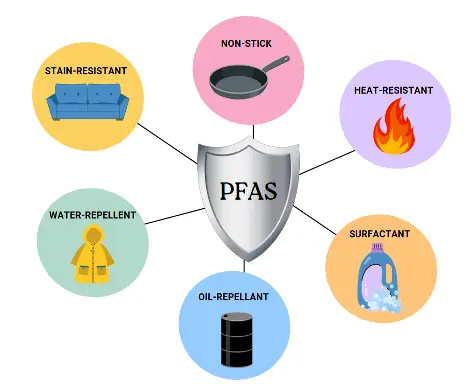
PFAS—also known as “forever chemicals”—are a family of more than 16,000 synthetic compounds that share something in common—they feature a strong carbon-fluorine bond that makes them resistant to heat, water, oil, and degradation.
PFAS are commonly used in food and beverage packaging because they are extremely durable and versatile. However, these same benefits also result in their persistence in the environment and the human body.
Water contaminated with PFAS poses a substantial threat to the safety of the food and beverages that we consume every day. To date, PFAS has been detected in the following:
Seafood: Fish caught from PFAS-contaminated waterways is a recognized pathway for human exposure. Because PFAS are often discharged into waterways, sea creatures can accumulate them over time. Longer-chain PFAS, such as perfluorodecanoic acid (PFDA) and perfluoroundecanoic acid (PFUnDA), tend to remain in the environment much longer and accrue in the fish that we eat.
Agriculture and Livestock: PFAS that enter the water supply can end up in crops via irrigation and biosolids land applications used as fertilizer, or in livestock through the water that animals drink. This means that PFAS contamination is woven into the food supply at a fundamental level: soil, groundwater, and fertilizers all serve as vectors that carry these chemicals into the plants and animals that we eat.
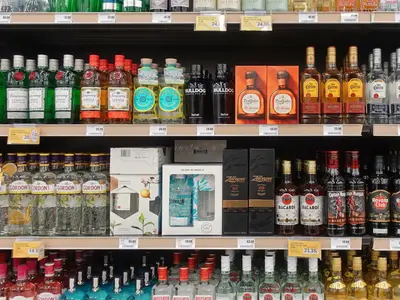
Beer, Wine, and Other Beverages: Most beverages consist primarily of water, which, if contaminated with PFAS, can represent an exposure risk. For example, beer is more than 90% water. Although breweries typically filter and treat their source water, existing processes may not remove contaminants such as PFAS. In a recent study, researchers from RTI International tested beers available at retail stores across the United States and found that 95% of the tested beers contained PFAS, with the highest concentrations showing up in regions with known water contamination.

Because you cannot see, smell, or taste many chemicals including PFAS in beverages, product testing is critical to understand whether PFAS are present. – Jennifer Hoponick Redmon
Beyond the food chain itself, the materials that come into direct contact with our food represent another route of PFAS exposure. The materials known to contain PFAS are far-reaching and include the following:
Grease-Resistant Paper and Paperboard Packaging: A variety of food packages, including microwave popcorn bags, fast food wrappers, bakery bags, pizza boxes, and takeout containers, have long been treated with PFAS-based coatings to prevent grease from soaking through. Because PFAS molecules are more loosely attached to packaging materials than to metal cookware, the chance that they migrate into food can be higher. Migration potential is elevated for emulsified foods and foods with a high fat content, low pH, or high salt concentration, such as bagged, buttery popcorn; candy bars; sauces; and dressings. The risk of migration from packaging into food also increases with higher temperatures.

In 2024, the U.S. Food and Drug Administration announced new regulations aiming to prevent these exposure routes. However, a 2024 peer-reviewed study found that 61 of 68 PFAS detected in food contact materials were present “unintentionally”—meaning not deliberately included in production—and, therefore, would be unscreened by industry and regulators.
Nonstick Cookware and Coatings: Nonstick cookware has been one of the most publicly scrutinized applications of PFAS. Research has found that PFAS migration from nonstick cookware increases with repeated use, with concentrations nearly doubling after just five uses and continuing to rise with further use.
The regulatory environment is beginning to move to address this exposure risk. In 2025, Minnesota became the first state to ban the sale of nonstick cookware coated with PFAS. Additionally, Vermont, Connecticut, Rhode Island, and Colorado are moving ahead with their own bans or restrictions.
Other Food Contact Articles: PFAS in food contact materials extend well beyond grease-resistant packaging and nonstick cookware. In plastics, PFAS show up as extrusion and mold-release agents; the chemicals are also used in printing inks and label adhesives.
PFAS can enter the picture at multiple stages of production. Exposure is not limited to intentional additives but can also be a by-product of how materials are made.
Food processing equipment is another potential source of exposure. The gaskets, seals, and lubricants lining industrial machinery can leach PFAS into food throughout the production and packing process.
Several alternatives that minimize the risks associated with PFAS are already being used or assessed by product developers and researchers globally. The selection of alternatives is largely determined by the application, function, or specific use case of PFAS. These alternatives may involve material redesign, use of other chemistries, or physical surface modifications, depending on the requirements of the intended use.
For example, ceramic or hybrid-ceramic cookware materials have emerged in recent years. Some cookware surfaces have also been modified to mimic the water-repelling properties of a lotus leaf through nanotexturized modification, giving them nonstick functionality. Non-PFAS chemistries, such as waxes and non-fluorinated surfactants, have also demonstrated suitability as alternatives for specific applications.
Although there are a number of potential alternative chemistries and approaches to common PFAS exposure pathways in food and beverages, it is critical to fully assess the environmental and human health implications of any alternatives to avoid a regrettable substitution.
Although regulatory changes are important, food and beverage companies can also take proactive steps to minimize PFAS exposure risk across their portfolios. Examples include the following:
By leveraging a proactive approach, companies not only meet market demand but also build trust by prioritizing consumer health and sustainability.
The transition toward a safer food supply will require collective action, including consumers making informed decisions, researchers assessing risks and alternatives, regulatory bodies revising guidelines, and businesses proactively reducing the use of PFAS.
At RTI, we are leveraging our scientific expertise and a collaborative, systems-level approach to help organizations navigate this evolving landscape. Our multidisciplinary team of chemists, toxicologists, engineers, environmental scientists, risk communicators, and public health researchers are helping organizations map PFAS use, measure contamination, and evaluate emerging alternatives with scientific rigor. Through this integrated approach, we help partners de-risk their supply chains and adopt safe, sustainable alternatives.
Learn more about RTI’s scientific solutions that address the full scope of the PFAS problem and sign up for The Growth Brief Newsletter to get insights in your inbox.