Impact
Objective
To study whether HIV-positive blood, managed with anti-retroviral therapies, is more susceptible to non-hereditary cancers compared to HIV-negative blood.
Approach
We compared the blood of over 500 people (some HIV-positive and some negative) and looked for genes that express biological dysregulation that may result in cancer. We identified 566 genes and 5 immune cell types working differently and uploaded the data to Realomics, an RTI bioinformatics platform, to search for drugs that could be repurposed and target the affected genes.
Impact
Realomics revealed 111 differentially expressed genes that were targets for at least one compound. Of those 111 genes, 55 were affected by anti-retroviral therapies and 42 were targeted for an approved drug. Additionally, 11 genes can be treated with existing drugs. This data shows potential for drug repurposing for HIV treatments.
What is HIV and How is it Treated?
Over a million people in the United States are living with human immunodeficiency virus (HIV). HIV attacks the body’s immune system, specifically cells that help the body fight infections. Once someone contracts HIV, they have it for life and are more vulnerable to life-threatening infections. Left untreated, HIV progresses to acquired immunodeficiency syndrome (AIDS), which is often fatal.
In the mid 1990s, anti-retroviral therapies were introduced to the market as a successful treatment for managing the disease. These therapies are a combination of medicines that work together to prevent HIV from reproducing and transmitting to others. Anti-retroviral therapies have been a life-saving treatment for HIV patients, reducing the risk of HIV progressing to AIDS.
Can Treatment for HIV Influence Other Health Risks?
People who are HIV-positive can live a long and healthy life if they maintain treatment. However, the scientific community still has more to learn about HIV. Current research seeks to better understand how HIV affects the body, which could lead to new therapies.
With funding from the National Institutes of Health (NIH), RTI scientists explored how those living with HIV and receiving anti-retroviral therapies are susceptible to co-occurring conditions like cancer. If scientists can understand the biological changes of the blood for HIV-positive patients through genomics, they can better tailor treatment and match patients with medicines that improve health outcomes. The goal of this agnostic study is to understand the biological changes that occur in HIV-positive people who are also on anti-retroviral therapies. Once those changes are better understood, they can be evaluated for drug repurposing opportunities using Realomics, a bioinformatics platform.
Realomics is a comprehensive platform developed by RTI. It accelerates therapeutic discovery by scanning drug repurposing databases and finding compounds that target specific genes. Learn More.
Studying Genetic Dysregulation Among People Living With HIV
For this study, we compared the blood of over 500 people living with HIV and receiving anti-retroviral therapies to people who tested HIV-negative. We studied their genes to identify biological dysregulation. The results concluded the 566 genes and 5 immune cell types worked differently among the groups, with an increased risk of HIV-positive people developing cancer despite treatment. We also studied whether these genetic differences were hereditary and found little evidence to support it.
Based on these finds, the study showed that once a person contracts HIV and maintains treatment, the expression of some of their genes are persistently altered, resulting in a higher risk of developing health problems like cancer. Gene dysregulation cannot return to a pre-infected state with the current HIV treatments on the market.
Using Realomics to Identify Treatment for Differentially Expressed Genes
Our team then sought to understand whether HIV-associated differentially expressed genes (DEGs) were known targets for drug compounds in clinical trials or in the approved drug development stage. DEGs are defined by the over expression (often leading to increased activity) or repressed expression (often associated with loss of function) of genes within a cell that determine what each cell will do. An example is comparing healthy tissue with diseased tissue to identify which genes are causing the disease to progress.
We uploaded the 566 DEGs into Realomics, which scanned four drug target databases (DrugBank, Open Targets, Pharos, and Therapeutic Target Database) for known compounds that can target those genes. The results revealed 111 DEGs that were targets for at least one compound. Of the revealed DEGs, our team classified 55 as affected by anti-retroviral therapy and 42 as targets for an approved drug. The research also showed that 11 of the DEGs can be treated with existing drugs.
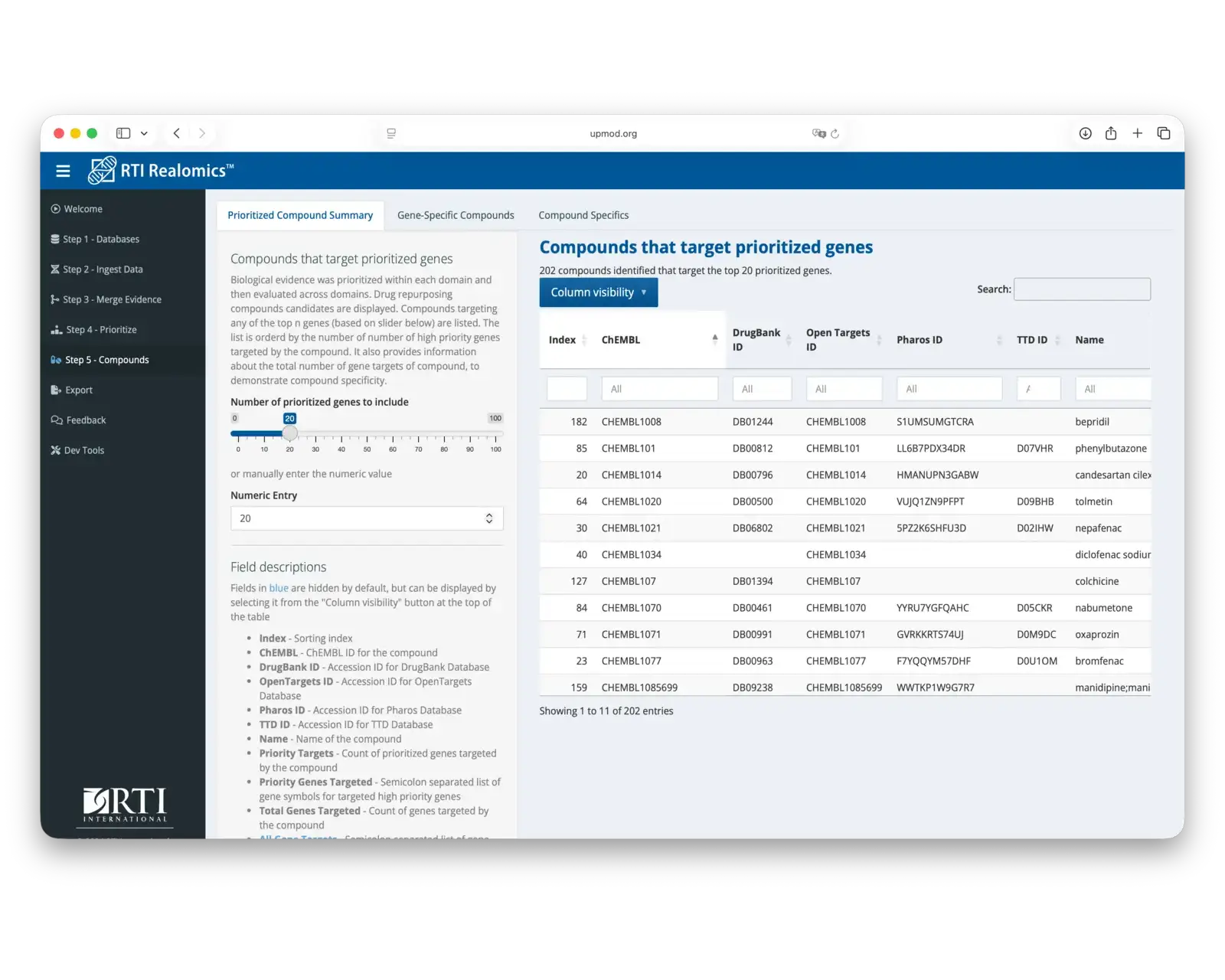
Realomics platform.
Hope for Better Cancer Treatment Among HIV-positive Population
Treatments targeting or preventing cancer in people living with HIV are unique. Multiple factors, including individual genes, time of therapy, and which therapy can influence how a person responds to treatment. However, repurposing drugs to target affected genes has the potential to successfully reduce the risk of developing cancer among an HIV-positive population receiving anti-retroviral therapies.
Our study is a step towards understanding how HIV alters gene expression and its association with the risk of developing cancer, and translating this biological discovery into clinical practice by identifying drug repurposing candidates that target dysregulated genes.